The moment I stepped into Nalcott on the evening of May 16, 2026, I realized the usual rustle of wind through dead grass had been replaced by something uglier: a sniper round passing through a collapsed overpass, through two concrete walls, and into my skull. My squad’s comms lit up. “Wall-vision again,” Mira said. What I did not know was that we were standing inside the exact window the Once Human Development Team was tracking: May 15 to May 21, 2026.
Over that week, 78 players were banned in total. The public penalty log named 36 accounts for using cheats and hacks, and 7 more for maliciously affecting other players. Reading the list felt like an X-ray of a fractured bone—brutal to look at, but necessary to understand where the break was. The most reported behaviors were wall-hacking, core-hacking, wall-vision, and auto-aiming, all of which I had encountered in some form or another. Wall-hacking especially had turned ambushes into a farce. You do not outplay a player who sees through stone; you just become a statistic.
I reported the sniper with a clip attached through the in-game reporting system. The confirmation screen was quick, but the process reminded me of dropping a message in a bottle into a very deep lake. The team has been updating their AI model, and backend monitoring data still shows a slight chance of false bans. That means the net is being pulled carefully, not blindly. If anyone is caught in a false positive, the appeal screen is there, and the team promises a response within 24 hours.
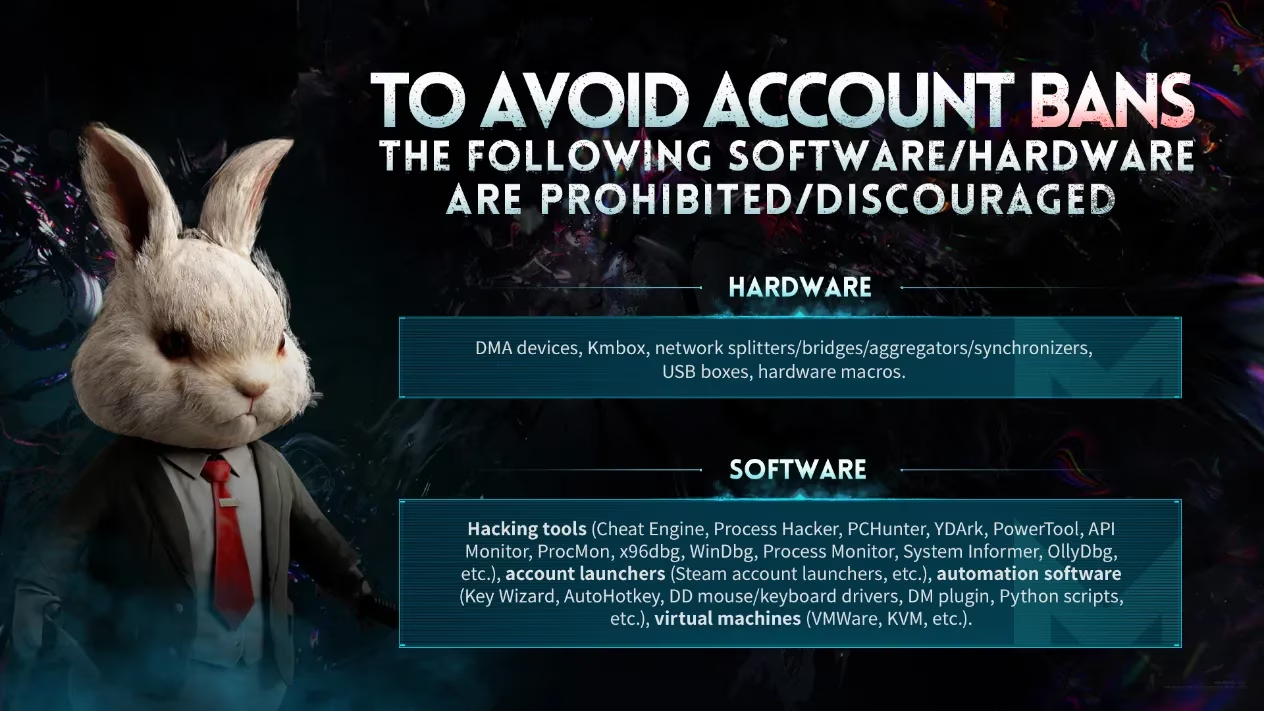
By May 18, my report had joined a larger wave. The announcement made one thing clear: newly discovered cheats are identified by their characteristics and used for retroactive investigations. Once an account is banned, any associated alt accounts are checked and banned as well. That detail gave me the same feeling as watching someone pull a dandelion out by the root instead of just tearing off the leaves. It is not enough to remove one cheating account; the whole cluster has to go.
The week also brought 139 penalties for language violations. I did not expect the breakdown to read like a weather report, but it did:
| Penalty duration | Cases |
|---|---|
| 30 days | 1 |
| 7 days | 6 |
| 1 day | 100 |
| 2 hours | 32 |
The team said space limits kept them from publishing the speech-violation list. They also mentioned a focused optimization effort for the chat restriction system, including upgraded smart filtering and better manual review. I have seen false positives there too. A friend once typed a harmless sentence about a “core walk” and was muted for two hours. The current system is not perfect, but the smaller two-hour bucket suggests they are trying to avoid turning every slip into a ten-day exile.
The most complicated part of the week was compensation. During the same period, 196 compensation grants were issued to 87 players under the cheat damage compensation mechanism. That number made me pause. It is a patchwork quilt, warm in places but full of gaps. The scope cannot yet cover every situation, and the team admitted that if you encountered cheating but did not receive compensation, it does not mean your experience was overlooked. The detection and coverage mechanisms simply have limits. I filed a feedback note with match information, the exact time, and how the sniper ruined our extraction. Every piece of feedback, they said, helps improve the compensation algorithms and expand protection coverage.
Malicious bug exploits and intentional disruption were also in the report. The stance was firm: verified malicious behavior that disrupts gameplay will result in immediate bans. Repeated violations escalate. That is how it should work. A game world feels alive only when the rules hold. Otherwise, Nalcott stops being a living landscape and becomes a shooting gallery where the targets are honest players.
The published list of severe violators is below. These are confirmed accounts, reviewed and banned.
By May 21, my squad had returned to normal runs. We still flinch at distant gunshots, but the ban wave felt like a pressure valve finally releasing. Not every cheater was caught, and not every victim was compensated. But the week proved something I had started to doubt: the people behind the game are still watching, still tightening the net, and still asking us to help them hold the line.
Comments