As I delve deeper into the post-apocalyptic world of Once Human, I've come to realize that survival hinges on more than just firepower. The food my character consumes plays a pivotal role in shaping my capabilities, offering temporary stat enhancements and unique perks that can turn the tide in a hostile encounter. Unlike standard sustenance that merely replenishes energy, the intricate culinary system in this game allows for the crafting of complex recipes. The secret ingredient to unlocking these powerful buffs? Deviated crops – special, non-decaying mutated plants that form the cornerstone of advanced gastronomy in 2026. My journey from scavenging for scraps to cultivating a thriving farm of these pink-fumed wonders has been transformative, and I'm here to share the cultivated wisdom.
Understanding Deviated Crops and Their Superiority
Deviated Crops are not your average harvest. When I first encountered one, its distinct visual marker was unmistakable—a radiant, pinkish aura or fume enveloping the mature plant. This ethereal glow signifies its mutated, deviant nature. The most significant advantage, beyond their striking appearance, is their perfect preservation. Unlike regular crops that wilt and decay, forcing rushed consumption or preservation efforts, deviated crops remain eternally fresh. This perpetual shelf-life is invaluable for planning and executing complex cooking sessions. Primarily, these crops are the essential components for special, high-tier food recipes. These dishes don't just fill a hunger bar; they confer multiple, stacked temporary buffs that can dramatically enhance attributes like strength, stamina, or resistance, giving me a crucial edge in exploration and combat.
From Scavenger to Cultivator: The Farming Paradigm Shift
Early in my adventure, I spent countless hours combing the wilderness, hoping to stumble upon these rare mutated plants. It was a grueling, unreliable process with meager yields. The epiphany came when I shifted my strategy from foraging to systematic cultivation. Establishing a dedicated farm within my secured territory proved to be the only sustainable and efficient method. By controlling the environment, I could actively influence the mutation rate of my standard crops, transforming them into the coveted deviated variants. This approach guarantees a steady, renewable supply, turning a scarce resource into a manageable agricultural product.
The Art of Induced Mutation: Fertilizers and Techniques
The core of reliable deviated crop production lies in the strategic application of specialized fertilizers. My farm's success is built on understanding and utilizing two key compounds:
| Fertilizer Type | Primary Effect | Resource Cost & Viability | Best Use Case |
|---|---|---|---|
| Improved Compound Fertilizer | Significantly boosts mutation chance | Moderate; resource-friendly for sustained farming | The go-to choice for long-term, sustainable deviated crop production. |
| Mutation Boost Fertilizer | Drastically increases mutation chance | Very High; expensive and resource-intensive | A last resort or short-term boost for when you need a guaranteed yield quickly. |
For daily operations, I rely heavily on the Improved Compound Fertilizer. It provides a excellent balance of effectiveness and cost, allowing me to maintain a consistent output without depleting my precious material stockpiles. The Mutation Boost Fertilizer is saved for special circumstances—perhaps before a major expedition where I need to craft a large batch of powerful food. Its exorbitant cost makes it impractical for routine use, but its potency is undeniable.
Synergistic Systems: Territory Deviants and Foundational Loops
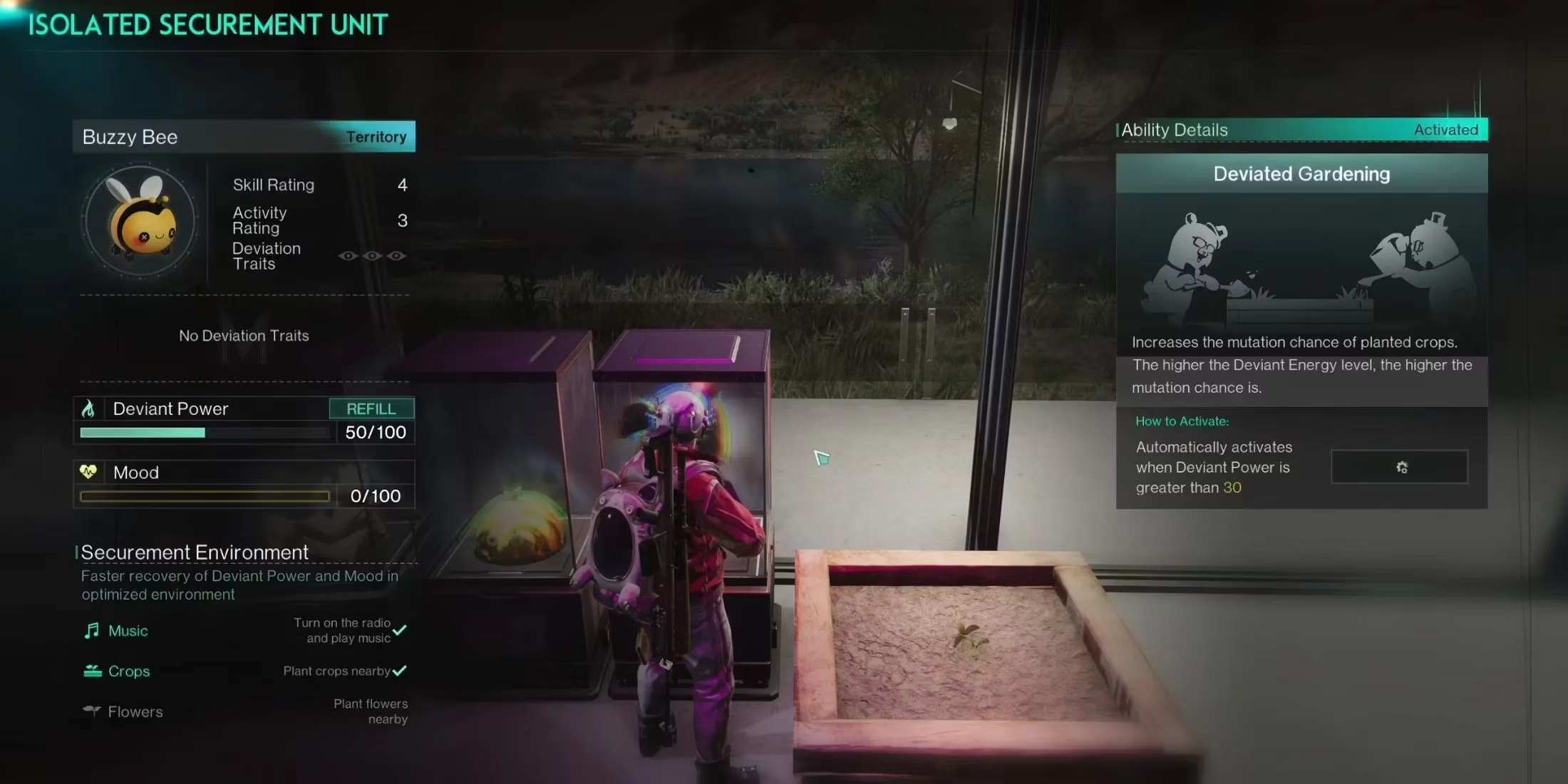
A fascinating and advanced layer of this agricultural system involves Territory Deviants. These are not plants, but mutant creatures or entities you can deploy to assist your base operations. I discovered that certain deviants specialize in botanical matters. For instance, deploying a deviant like the 'Buzzy Bee' (inspired by the image) can passively enhance the mutation probability of nearby crops. This creates a beautiful synergy: using deviants to help grow the deviated crops needed for more advanced recipes and fertilizers.
Furthermore, a common initial hurdle is a cyclical dependency: you need deviated crops (like mushrooms) to craft the very fertilizer that helps grow them. The solution often lies in that initial, arduous wilderness scavenge or utilizing territory deviants that can find or generate small amounts of deviated materials to kickstart the production cycle. Once the first batch is secured and used to craft fertilizer, the self-sustaining farm loop begins.
The Culinary Payoff: From Crop to Power Buff
So, what do I do with this bountiful harvest of glowing plants? The end goal is always the kitchen. Here’s a typical progression of value:
-
Raw Deviated Crop: Valuable, non-decaying ingredient.
-
Special Recipe Crafting: Combined with other rare components in a cooking station.
-
Powerful Consumable Created: Results in food that grants buffs such as:
-
Enhanced Regeneration: Health or stamina recovers at an accelerated rate.
-
Damage Amplification: Increased weapon or ability damage for a duration.
-
Environmental Resistance: Better protection against extreme weather or toxicity.
-
Perk Activation: Unlocks temporary abilities normally inaccessible.
-
This system elevates cooking from a mundane survival task to a core strategic pillar. Planning a raid on a high-level area now involves not just checking my ammo, but also preparing a meal that will give me the strength and resilience to succeed.
In conclusion, mastering deviated crops in Once Human has been a game-changer for my survival strategy. By moving from random scavenging to controlled, fertilizer-enhanced farming, and leveraging the power of territory deviants, I've turned a rare commodity into a reliable source of power. Every pink-fumed plant harvested is a direct step toward crafting the next meal that will unlock my character's true potential in this unforgiving world. The farm is no longer just a food source; it's my laboratory for empowerment.
Comments