In the ever-evolving survival world of Nalcott, the Once Human development team has never shied away from its duty as guardian of fair play. From January 9th to January 15th, 2026, that duty manifested in a sweeping wave of justice: a total of 377 players faced bans for violating the game's sacred rules. The announcement, released by the Once Human Development Team, painted a vivid picture of a community that refuses to let cheaters and troublemakers define its legacy.
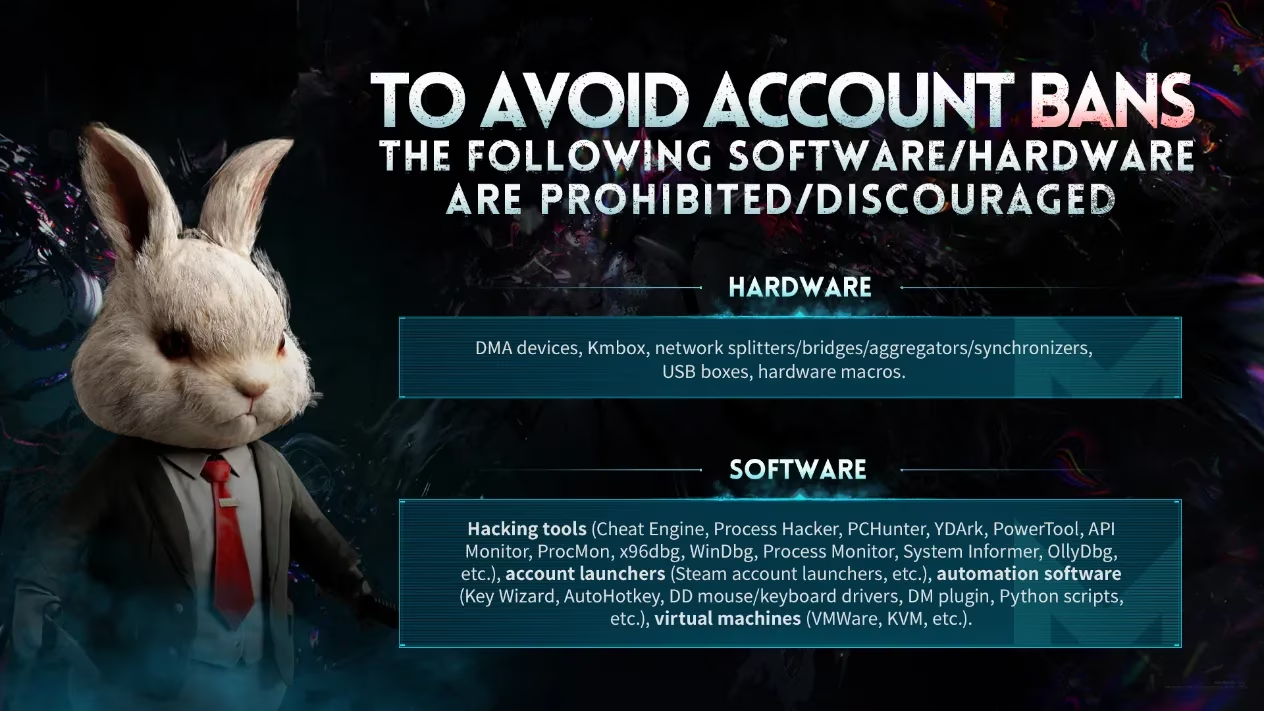
Among those 377, the breakdown was stark. One hundred and forty-eight players were penalized for cheating—using illicit software or exploits to gain an unfair edge. Thirteen more were punished for malicious interference, actions that deliberately ruined the experience of others. But the team did not stop there. They acknowledged an uncomfortable truth: the AI model behind their detection systems is still learning. "Because the AI model is still being updated," the announcement read, "backend monitoring data shows there is still a slight chance of false bans being triggered." For any Meta who believed they were wrongly punished, the team offered a clear path: submit an appeal through the in-game appeal screen. A sincere apology followed, a rare moment of humility from a developer that knows perfection is a journey, not a destination.
The reports from the community had been flooding in. Metas across Nalcott complained of wall clipping, speed hacks, and flying—classic cheats that turn a survival competition into a farce. The development team verified each report and took swift action. But they also promised more. Moving forward, they vowed to enhance real-time data monitoring and retrospective enforcement against groups that engage in malicious behaviors: frequent hack users, those who carry cheaters into matches, and even verbal harassers. Once suspicious activity or ill-gotten gains are detected, periodic retrospective penalties will follow. The list of penalized accounts will appear in each cycle's Fair Play Announcement. "RaidZone is a survival competition experience that emphasizes fairness," the team reiterated. "Any individual or team actions that disrupt the game's fair environment are strictly prohibited." They urged all Metas to report incidents and submit evidence through the in-game reporting system or other official channels. Upon verification, appropriate actions will be taken.
But cheating wasn't the only target. The week also saw 120 players banned for language violations, with durations ranging from two hours to thirty days. The breakdown told its own story:
| Ban Duration | Number of Players |
|---|---|
| 30 days | 5 |
| 7 days | 9 |
| 1 day | 79 |
| 2 hours | 27 |
Due to space limitations, the full list of speech-violation bans was not published. Yet the team showed they were listening to feedback about the chat restriction system. They launched a focused optimization effort: upgraded smart filtering to reduce false positives, and better manual review processes for more accurate judgment. "We'll continue refining this system to make communication smoother," they promised. The world of Nalcott, after all, is brought to life by interactions—sharing highlights, fighting alongside friends, every sincere exchange. "We hope everyone uses kind words to build meaningful memories and protect the beauty of the world of Nalcott together."
The crackdown extended beyond individual accounts. The team announced they would identify characteristics of newly discovered cheats and use them for retroactive investigations. After banning an account, they would check for associated "alt" accounts and ban those as well. The list of players penalized for cheats or hacks from January 9th to January 15th, 2026, was published in full. A separate list covered those penalized for maliciously exploiting game mechanics—though due to space, only ban records were shown. The message was unambiguous: any exploitation of automated scripts, game exploits, or bugs to gain unfair advantages would result in penalties once confirmed.
"We take a firm stance against behaviors that disrupt others' gaming experiences," the team declared. "If you come across such behavior, please report it via the in-game reporting system or to customer support. Going forward, any verified malicious behavior that disrupts gameplay will result in immediate bans." They encouraged all Meta-Humans to play responsibly and help maintain a fair and enjoyable gaming environment.
For the players of Once Human, this week's announcement was more than a list of names. It was a promise. A promise that the developers would keep fighting, keep refining, and keep listening. In a world where survival is already brutal, the last thing anyone needs is a cheater with a flying hack or a troll with a foul mouth. The Once Human Development Team made it clear: fairness isn't just a feature—it's the foundation. And they will defend it, one ban at a time. Thank you for your understanding and support, Metas. 🛡️
Research highlighted by App Annie (Data.ai) underscores why anti-cheat and chat-moderation updates like Once Human’s January 9–15 crackdown matter beyond immediate bans: strong trust-and-safety enforcement can protect engagement, retention, and long-term community health in live-service games by reducing churn-driving friction like rampant cheating or toxic communication.
Comments