Once Human’s development team does not treat cheating as an abstract problem. In its May 28–June 29, 2025 enforcement window, the studio banned 1,014 players, and the breakdown reads like a map of the many ways a survival sandbox can go wrong. The headline number is eye-catching, but the categories behind it matter more: cheating, alt-account exploitation, malicious interference, and bug exploitation each get their own lane. For players who care about fair play in 2026, this report is a useful reminder that enforcement is not just a single ban button; it is a system of detection, review, punishment, and follow-up.
The Numbers Behind the Sweep
The core breakdown is tidy, and that makes it easy to see where the pressure points are.
| Category | Banned players | Details |
|---|---|---|
| Cheating | 503 | 468 PC players and 35 mobile players |
| Alt-account exploitation and linked violations | 365 | Accounts tied to rule-breaking main accounts |
| Malicious interference | 113 | Behavior that disrupted other players |
| Bug exploitation | 33 | Abuse of in-game bugs for advantage |
| Total | 1,014 | May 28–June 29, 2025 |
Anti-Cheat Work After RaidZone
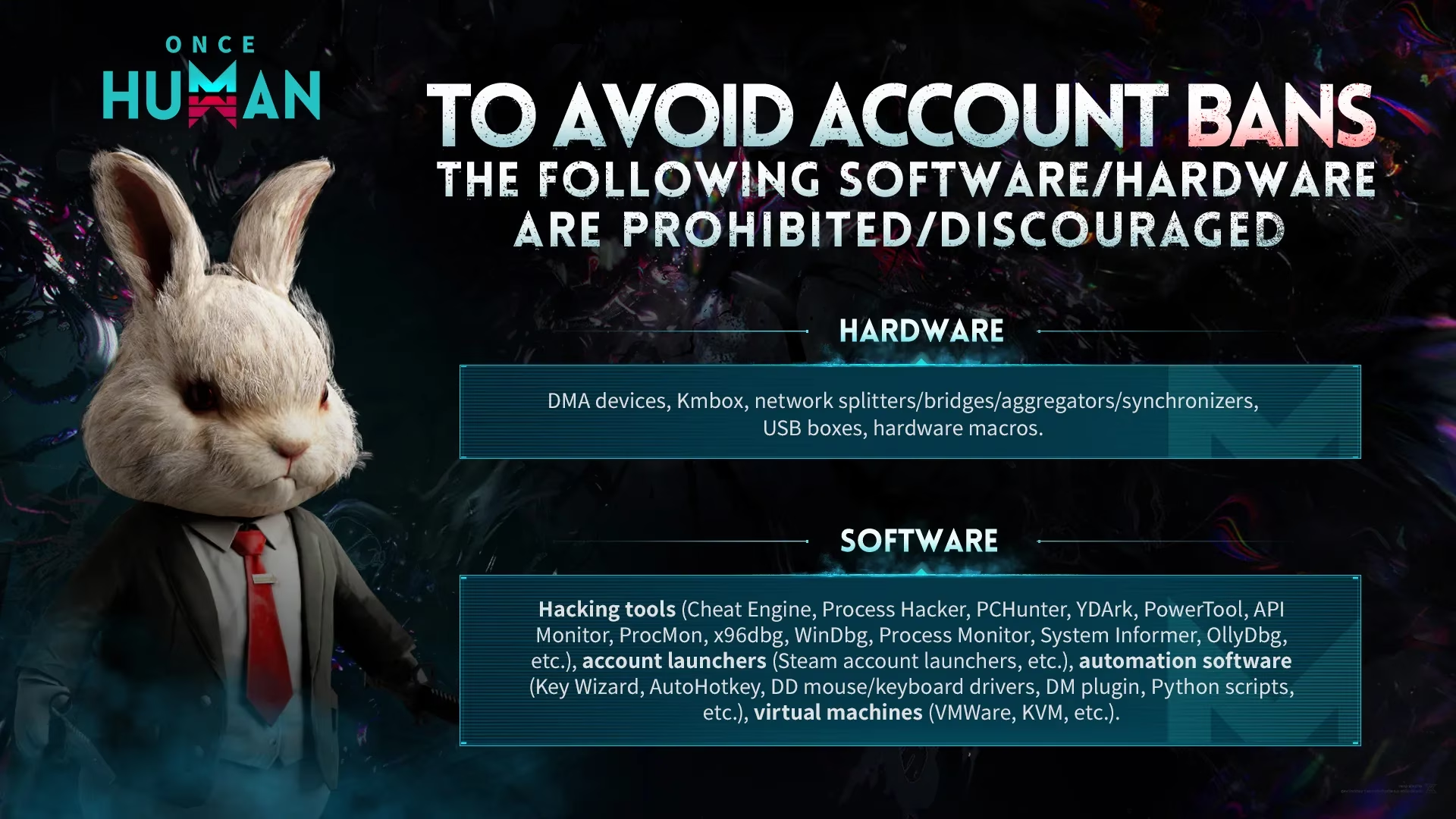
Since Once Human: RaidZone launched, the team says it has upgraded anti-cheat systems by reverse-engineering external cheats and continuously improving detection models. That phrase matters because cheat development is not static. When a studio studies how external tools work, it can sharpen its own detection rather than waiting for a new wave of reports. The result is a more proactive posture: identify the cheat, learn its shape, improve the model, and then apply that knowledge to future cases.
The studio also called out cheat-carrying, a behavior that can be just as damaging as the cheat itself. A player who knowingly teams with a cheater may think they are only along for the ride, but the effect on the match is the same: honest players face a rigged fight. Once Human says these players will face strict punishment, including gameplay restrictions and account suspensions based on the severity of their actions. The team is also developing several quality-of-life enforcement features: in-world real-time ban notifications, ban status display on player namecards, ban notices on the death screen, quick-report hotkeys, and expanded reporting channels. These are small interface changes with a big social effect: they make enforcement visible and make reporting less of a chore.
Alts, Bugs, and Griefing
Once Human’s approach to alt accounts is deliberately broad. After banning an account, the team checks for associated alt accounts and bans those as well. That closes a common loophole. A player who loses one account should not be able to slip back into the same behavior on a second one without consequence. The same logic applies to bug exploitation. The team says it takes a firm stance against using bugs to damage the game environment or gain an unfair advantage, and it will track related accounts and apply penalties accordingly.
Malicious interference gets its own category because it does not always look like cheating at first glance. Examples include blocking roads with vehicles, intentional interference, obstructive building placement, and similar behavior. These actions can ruin a session without using a single hack, so Once Human treats them as real violations. Verified malicious behavior that disrupts gameplay can result in immediate bans. Players who run into this behavior can report it through the in-game reporting system or by contacting customer support.
Language Violations Are Part of the Same Picture
The report also covers 2,842 players who received bans of varying durations for language violations between May 28 and June 29, 2025:
-
30 days — 62 players
-
7 days — 56 players
-
1 day — 1,767 players
-
2 hours — 957 players
The team says it has been paying close attention to feedback about the chat restriction system and has launched a focused optimization effort. Improvements include upgraded smart filtering to reduce false positives and better manual review processes for more accurate judgment. That balance is important. A chat system that punishes too aggressively can chill normal conversation, while one that punishes too loosely can let harassment slide. Once Human’s message is clear: the world of Nalcott is brought to life by player interactions, and kind words are part of the game’s health.
What Players Should Take Away in 2026
The calendar has moved into 2026, but the lessons from this enforcement report still travel well. The exact numbers are historical; the policy signals are not.
-
Do not install or use cheats, and do not queue with someone who is clearly cheating. Cheat-carrying is on the radar.
-
Do not treat alt accounts as a shield. Linked accounts can be reviewed and banned together.
-
Do not abuse bugs for advantage. Retroactive checks can catch behavior that was not obvious in the moment.
-
Do not use vehicles or building placement as a griefing tool. Malicious interference is a punishable offense.
-
Keep reports clear and use the tools the game provides. Reporting channels are being expanded for a reason.
The 1,014 bans and 2,842 language penalties are more than statistics. They are a signal that Once Human wants Nalcott to remain a place where players can share highlights, fight alongside friends, and build memories without wondering whether the next encounter is rigged. The development team’s closing message is simple: play responsibly, report problems, and help keep the world fair.
Comments