In the ever-evolving landscape of gaming, few releases have managed to capture the collective imagination quite like Once Human. As we look back from the vantage point of 2026, the game's journey from a highly anticipated launch to a cornerstone of the survival RPG genre is a story worth telling. Remember the tension of that global countdown? The promise of a world on the brink, where players would become the architects of a new civilization? That promise was not only fulfilled but has been expanded upon in ways few could have predicted. What does it mean to be the last hope for humanity in a world corrupted by an alien force? Once Human posed this question and let players answer it through fire, steel, and sheer will to survive.
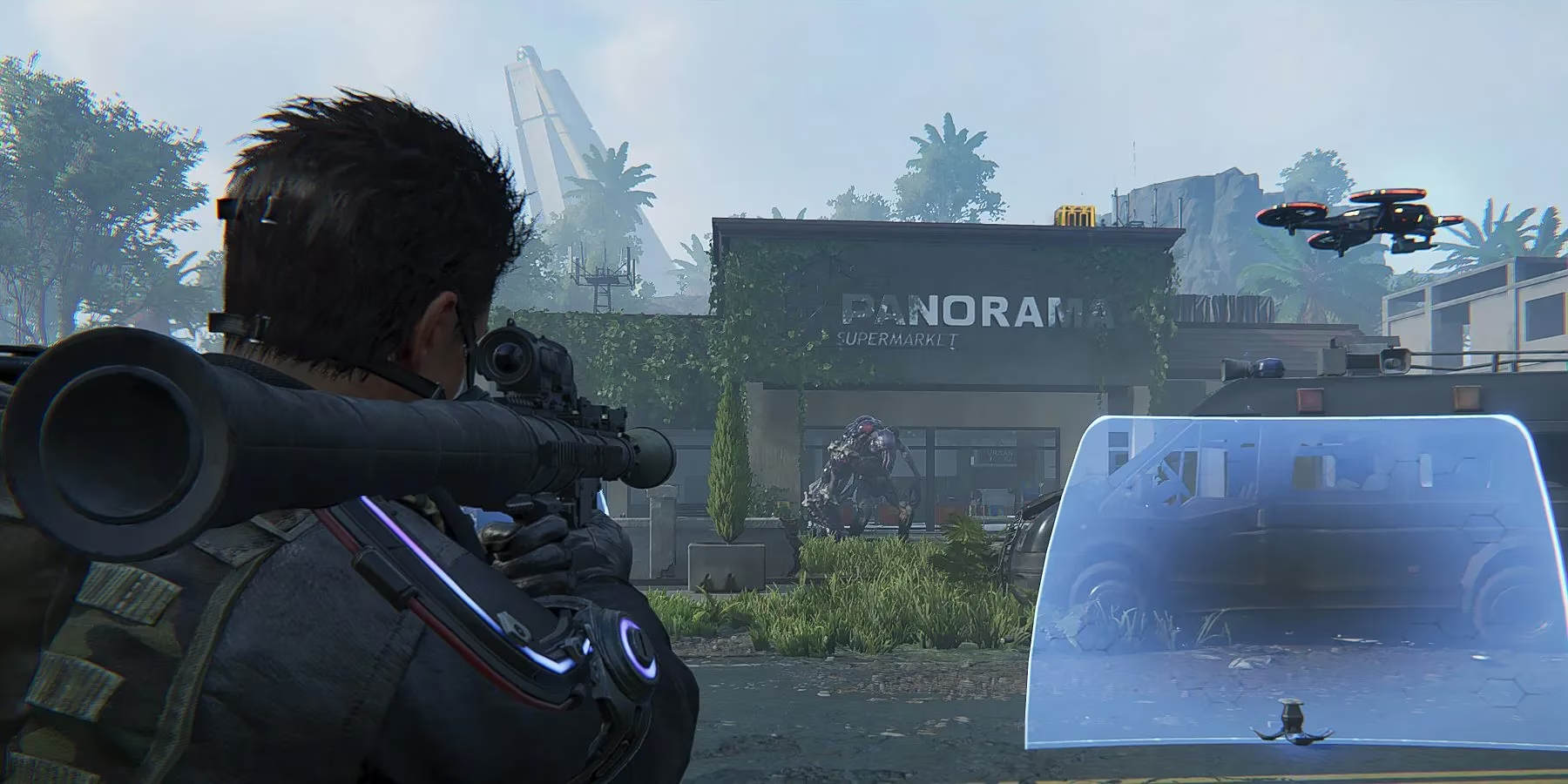
The core premise remains a powerful hook. The invasion of the extraterrestrial entity known as Stardust and its devastating Stardust virus created a setting of unparalleled desperation. Players didn't just step into a post-apocalyptic world; they were born into it as Meta-Humans, genetic anomalies capable of resisting the full corruption of the virus. This wasn't merely about finding food and shelter. The very environment was an adversary. Can you imagine the grim calculus of survival? Drinking tainted water to stave off dehydration, knowing it chips away at your sanity. Consuming spoiled food for energy, while it permanently lowers your maximum health. Every choice was a trade-off, a step on a tightrope between immediate survival and long-term viability. The beasts, mutated by Stardust, were not just monsters to be slain; they were manifestations of a planet fighting back against an alien infestation.
The game's launch was a global event, synchronized yet personal for every time zone. From its initial release, it established itself as a truly cross-platform experience, uniting players on PC, iOS, and Android in a shared struggle. But how has it evolved? The world of Once Human in 2026 is vastly different from the one players first entered.
The Evolving World of Once Human (2026 Edition)
The developers at Starry Studio have been anything but idle. The narrative has expanded far beyond initial survival. What started as a personal fight to stay alive has blossomed into a saga of civilization rebuilding. Players are no longer lone wanderers; they are leaders of burgeoning settlements, diplomats between fledgling factions, and explorers of regions once thought unreachable.
-
New Regions & Biomes: The map has expanded to include zones with unique environmental hazards and resources. From crystalline forests where Stardust has taken a beautiful, yet deadly, form to sulfuric swamps that test the limits of environmental resistance.
-
Advanced Meta-Human Evolution: The skill trees and mutation systems have deepened. Players can now specialize their Meta-Humans into distinct roles—Beast Tamers who can pacify certain mutated creatures, Architects with enhanced building and crafting prowess, or Purifiers who can temporarily cleanse small areas of corruption.
-
Faction Warfare & Alliances: Several player-driven and NPC factions now vie for control over resources and ancient technology. Alliances are crucial for launching raids on high-level Stardust nests or defending your homestead from rival groups.
-
Sanity & Corruption Mechanics: The sanity system has been refined into a core pillar of gameplay. Low sanity doesn't just debuff you; it alters perception, causing hallucinations of threats or resources that aren't there. High corruption levels can unlock powerful, but dangerous and unstable, mutations.
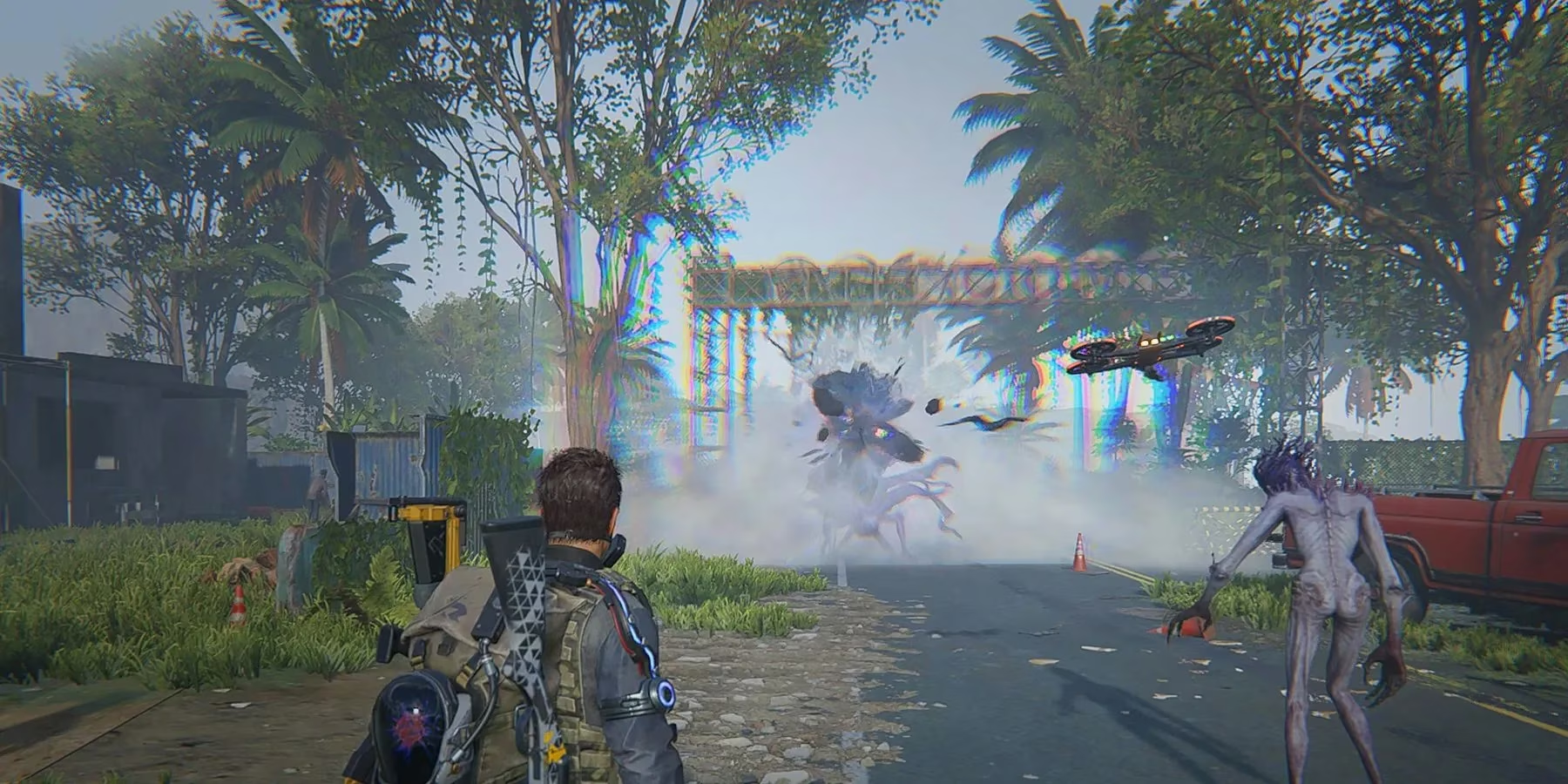
The social and cooperative aspects of the game have become its beating heart. Is a lone Meta-Human truly capable of rebuilding civilization? The answer, as proven by the community, is a resounding no. Massive player-built cities dot the landscape, complete with markets, farms, and defensive fortifications. Seasonal events often require entire servers to collaborate towards a common goal, such as pushing back a region-wide Stardust bloom or rebuilding a legendary pre-fall structure. The game masterfully creates stories not just through scripted quests, but through these emergent, player-driven narratives of conflict, trade, and cooperation.
A Legacy Forged in Desperation
Looking back, the success of Once Human can be attributed to its unwavering commitment to its theme. It never shied away from the grim reality of its setting, yet it always paired that desperation with tangible hope—the hope represented by every wall built, every field planted, and every alliance forged. The game asked difficult questions about the cost of survival and the meaning of humanity when pushed to the absolute limit. In 2026, it continues to ask those questions, providing a vast, ever-changing sandbox for players to write their own answers. The world may have ended, but for millions of players, the story of Once Human is still being written, one reclaimed piece of civilization at a time. The journey from survivor to founder is a long one, but it is a journey that remains as compelling today as it was on the first day of launch.
Comments