Let's face it, manually scooping water in Once Human is about as exciting as watching Stardust pollution settle. It's a chore. A soggy, repetitive chore that stands between you and the more thrilling aspects of post-apocalyptic survival, like building that perfect acid farm or concocting a gourmet irradiated stew. Thankfully, the developers, in their infinite wisdom, provided a solution: automation. Enter the humble, yet initially perplexing, Water Pump. This guide will unravel the mysteries of these contraptions, turning you from a weary water-bearer into a master of liquid logistics.
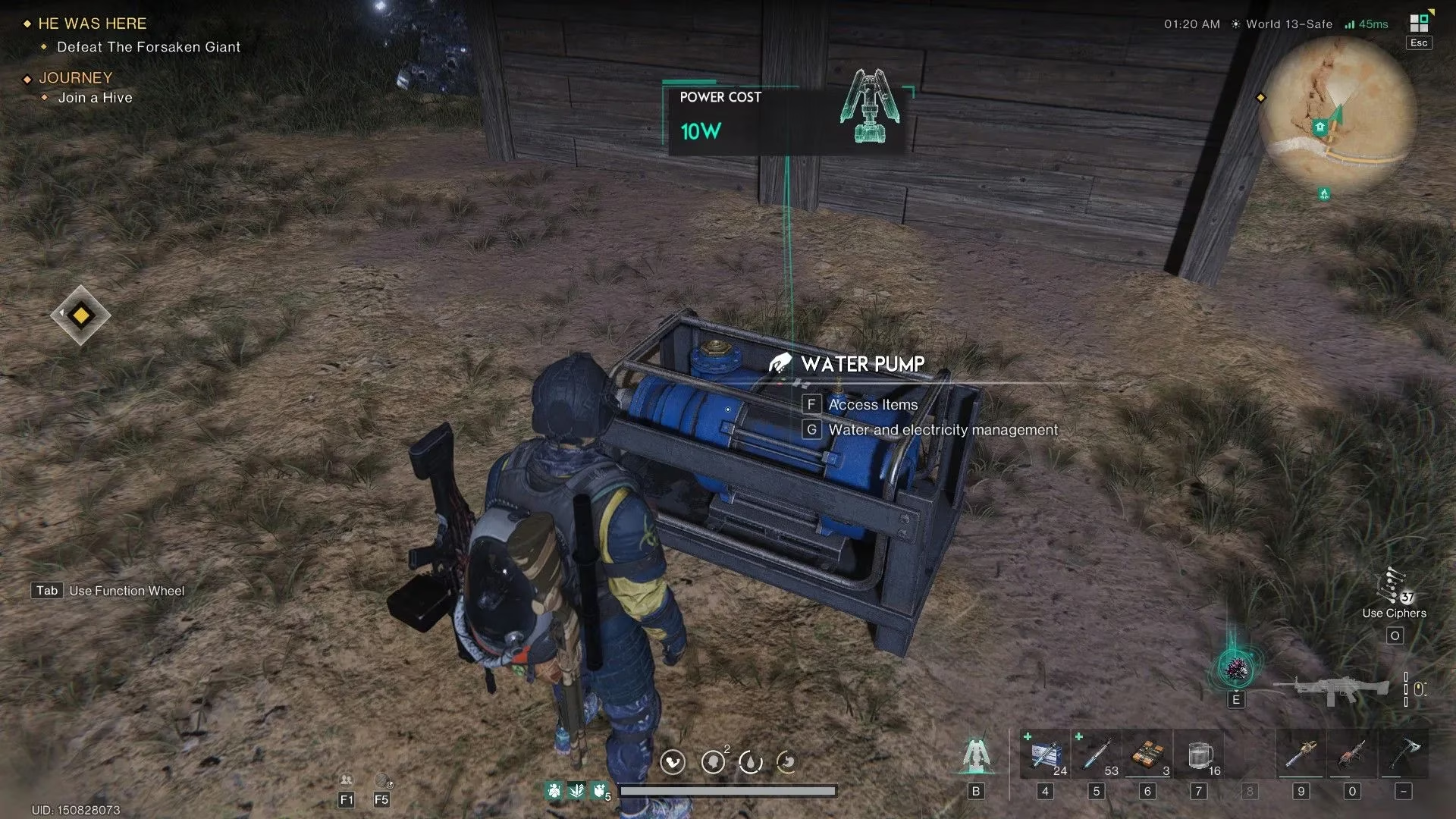
First things first, let's clear up the game's little naming joke. There isn't just one "Water Pump." Oh no, that would be too simple. There are two buildable objects sharing that title, and confusing them is a surefire way to flood your base with disappointment (and possibly Dirty Water).
-
Water Pump (Extractor): This is your workhorse, the one you plop down to suck liquid directly from the ground. Think of it as a straw for the earth.
-
Wall Pump: This little guy is the plumber's best friend. It doesn't collect anything new; instead, it moves liquid from one place to another, defying gravity and distance with the power of electricity.
Got it? Good. Let's dive into the Extractor first.
Mastering the Water Pump (Extractor): Your Personal Ground-Sipper
Normally, you'd be crouched by a riverbank, clicking away until your mouse finger cramps. The Extractor liberates you from this fate. Place it on dirt or sand, hook it up to power, and it will diligently gather Dirty Water for you. But wait, you can't drink that! It needs purification. You have two main options:
-
The Old-Fashioned Way: Collect the Dirty Water and boil it in a Stove. Reliable, but requires manual intervention.
-
The Automated Dream: Connect the Extractor directly to a Water Purifier using pipes. This is where the magic happens.
Here’s how to set up automated purification:
-
Enter Build Mode.
-
Approach your Extractor.
-
Press V to start laying pipe.
-
Lead the pipe to your Water Purifier.
-
Press V again at the purifier to complete the connection.
Presto! The Extractor feeds Dirty Water directly to the purifier, which outputs clean, drinkable water. You've just automated a core survival task. Give yourself a pat on the back.
But the Extractor isn't a one-trick pony. It's a savvy little device that changes its output based on where you plant it. It's like a geological sommelier.
| Placement Location | Liquid Produced | Primary Use |
|---|---|---|
| Dirt/Sand (Clean) | Dirty Water | Purification into clean Water. |
| Black Ground (Blackheart/Red Sands) | Crude Oil | Fuel for advanced crafting and generators. |
| Stardust-Polluted Dirt/Sand | Polluted Water | Crucial for crafting Acid. |
Ah, Polluted Water. The green, gloopy key to establishing a passive acid farm. One of the best early-game spots to find this precious resource is the Refinery Pollution Point, south of Greywater Camp in the Iron River region. You'll know you're in the right place when your backpack starts making an ominous ticking sound. Don't worry, it's just the Stardust; probably fine!
The Mighty Wall Pump: Defying Gravity for Fun and Profit
So you've got your Extractor sipping Polluted Water from a lovely toxic puddle... but your purifier and acid vats are way up on a cliffside base. Liquid doesn't flow uphill on its own. This is where the Wall Pump earns its keep.
 Think of the Wall Pump as a liquid elevator or a booster pump. Its sole job is to reverse the flow of water (or oil, or pollution). It allows you to place your Extractors at the lowest, juiciest liquid source and still pump it all the way up to your high-altitude fortress.
Setting up a Wall Pump system is straightforward:
-
Place a Wall Pump on any wall or vertical surface along the path you want your liquid to travel.
-
Connect a pipe from your Extractor (or any water container) to the Wall Pump.
-
Connect a second pipe from the Wall Pump to your destination (Purifier, Storage Tank, etc.).
-
CRITICAL STEP: Connect the Wall Pump to a power source. It needs electricity to run. A nearby Hydraulic Generator or any powered facility will do.
You can even daisy-chain multiple Wall Pumps to move liquid over vast distances or extreme vertical climbs. They are the unsung heroes of your industrial complex.
Putting It All Together: A Simple Acid Farm Blueprint
Let's apply this knowledge to build a basic, passive acid farm, a goal for many savvy Once Human players.
-
Location, Location, Location: Find a Stardust-polluted area (like the Refinery Pollution Point). Place your Water Pump (Extractor) directly on the polluted ground.
-
The Uphill Battle: Your base is on higher ground. Place a Wall Pump on a rock face or your base's foundation wall between the Extractor and your base.
-
Connect the Dots:
-
Pipe from Extractor → Wall Pump.
-
Power the Wall Pump.
-
Pipe from Wall Pump → a Storage Tank or directly to your Acid crafting station inside your base.
-
-
Enjoy the Spoils: The Extractor pulls Polluted Water from the ground, the Wall Pump pushes it up to your base, and your storage fills up automatically. Now you can craft Acid whenever you need, without ever visiting the toxic tick-tick zone again!
In conclusion, mastering Water Pumps in Once Human transforms the game from a grind into a symphony of automated efficiency. No more back-and-forth trips with a bucket. With the Extractor as your collector and the Wall Pump as your transporter, you can conquer the game's liquid logistics, securing a steady supply of Water, Crude Oil, and the all-important Acid. Now go forth, and let the rivers of resources flow to your doorstep! 🚰⚡
As detailed in GamesIndustry.biz, player-friendly quality-of-life systems like Once Human’s automated water logistics often reflect a broader survival-game trend toward reducing repetitive micromanagement so base-building and production chains (purification loops, fuel routing, and resource farming) become the primary strategic focus rather than manual gathering.
Comments